


“This article is for educational purposes only and is not a substitute for medical advice. Always consult your healthcare provider before making health or training changes.”
By Ryan Maxwell, CPT, CES, FMS
CEO, Fluid Health & Fitness
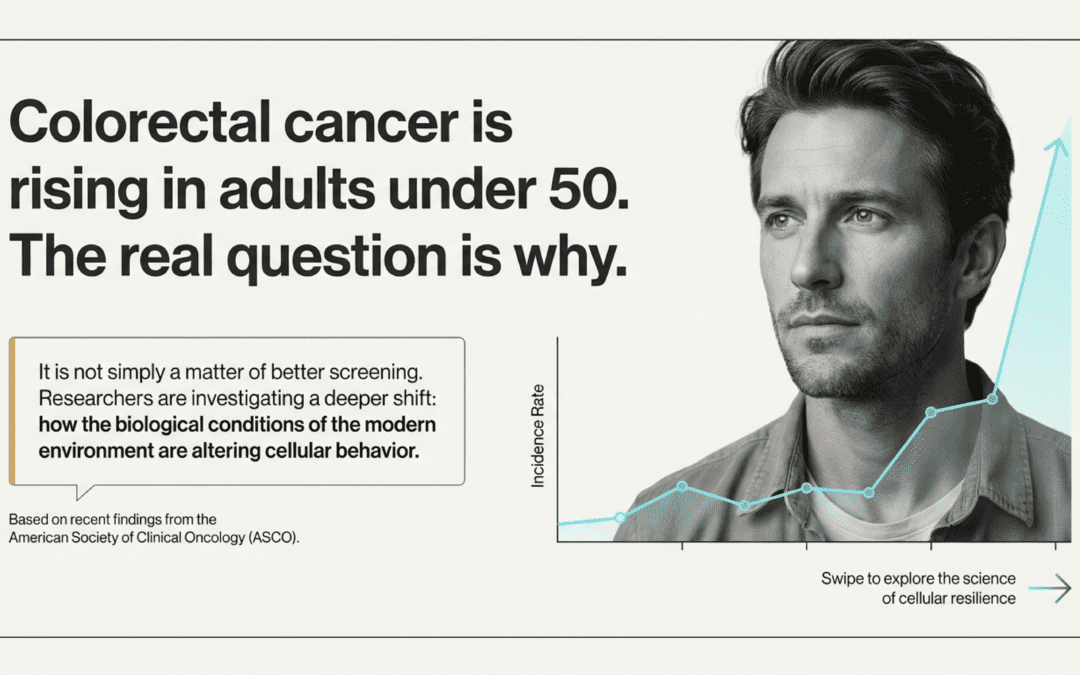
Over the last several years, healthcare researchers have become increasingly concerned about a troubling trend: colorectal cancer is appearing more frequently in adults under age 50.
This is not simply a matter of better screening or improved diagnosis. While those factors contribute, researchers around the world are investigating whether something about our modern environment is changing the biological conditions that influence cancer development.
Recent findings presented at the American Society of Clinical Oncology (ASCO) annual meeting have added another layer to this conversation. Researchers are exploring how ultra-processed foods, chronic inflammation, altered fatty acid balance, and disruptions in the gut microbiome may contribute to the rise of early-onset colorectal cancer.
The headlines often simplify these findings into statements such as:
"Seed oils cause cancer."
"Ultra-processed foods are toxic."
"Young people are getting cancer because of their diet."
The reality is more complicated.
And more important.
The science is not pointing toward a single villain. It is pointing toward a system that has become increasingly dysregulated over time.
The Body Rarely Fails Overnight
One of the core principles we teach at Fluid is:
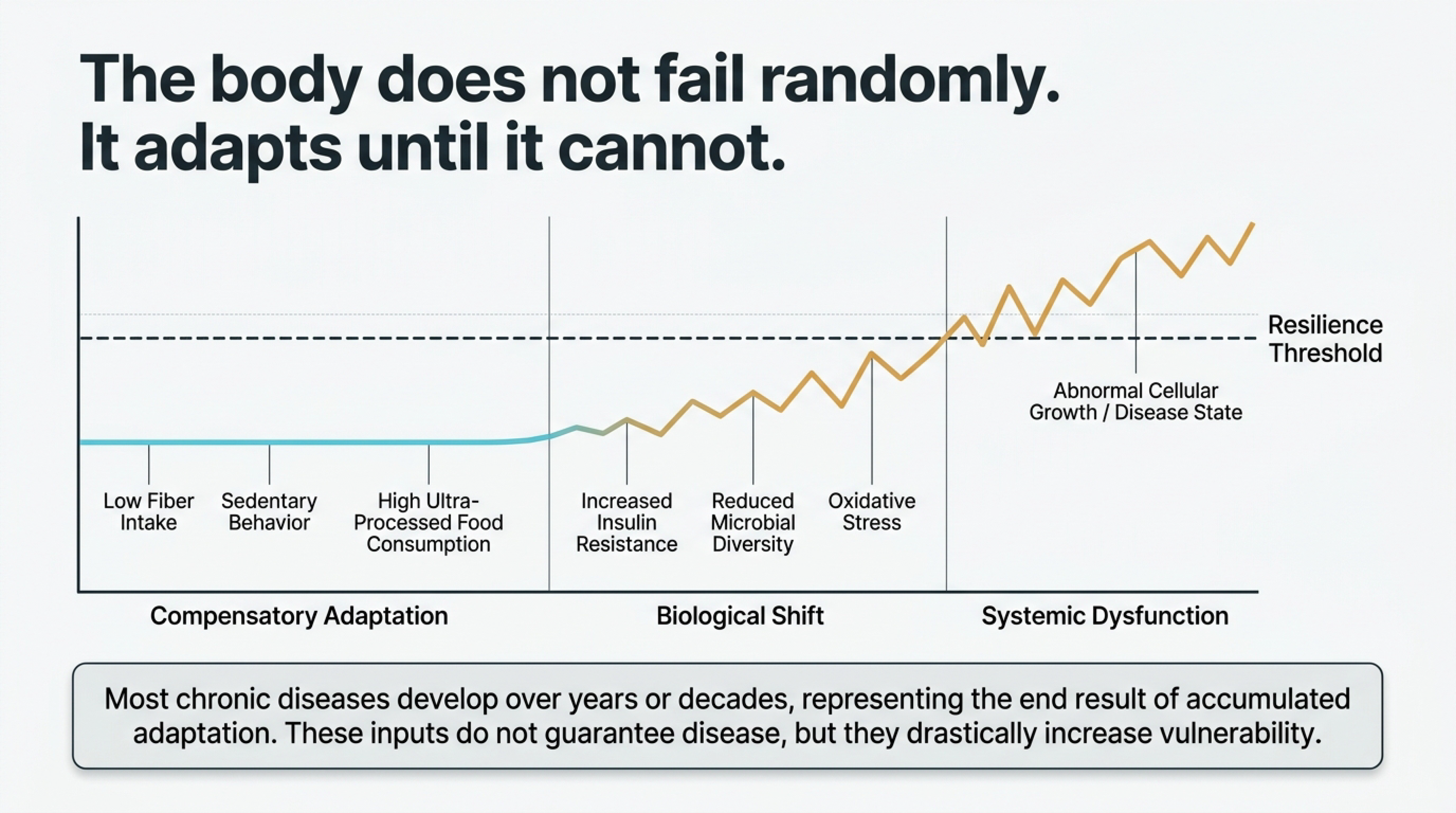
The body does not fail randomly. It adapts until it cannot.
Most chronic diseases develop over years or decades, not days or weeks.
The same principle applies to musculoskeletal injuries, metabolic dysfunction, cardiovascular disease, and potentially many forms of cancer.
What researchers are increasingly observing is that modern lifestyles may create conditions that slowly alter the biological environment inside the body:
- Higher levels of chronic inflammation
- Reduced microbial diversity
- Increased insulin resistance
- Reduced metabolic flexibility
- Increased oxidative stress
- Lower physical activity
- Reduced dietary fiber intake
- Greater consumption of ultra-processed foods
These factors do not guarantee disease.
But they may increase vulnerability.
What Researchers Are Actually Finding
The newest research suggests that early-onset colorectal cancer may behave somewhat differently than the colorectal cancers traditionally diagnosed later in life.
Investigators have identified unique inflammatory pathways and genetic signatures within tumors diagnosed in younger individuals.
Several emerging themes continue to appear:
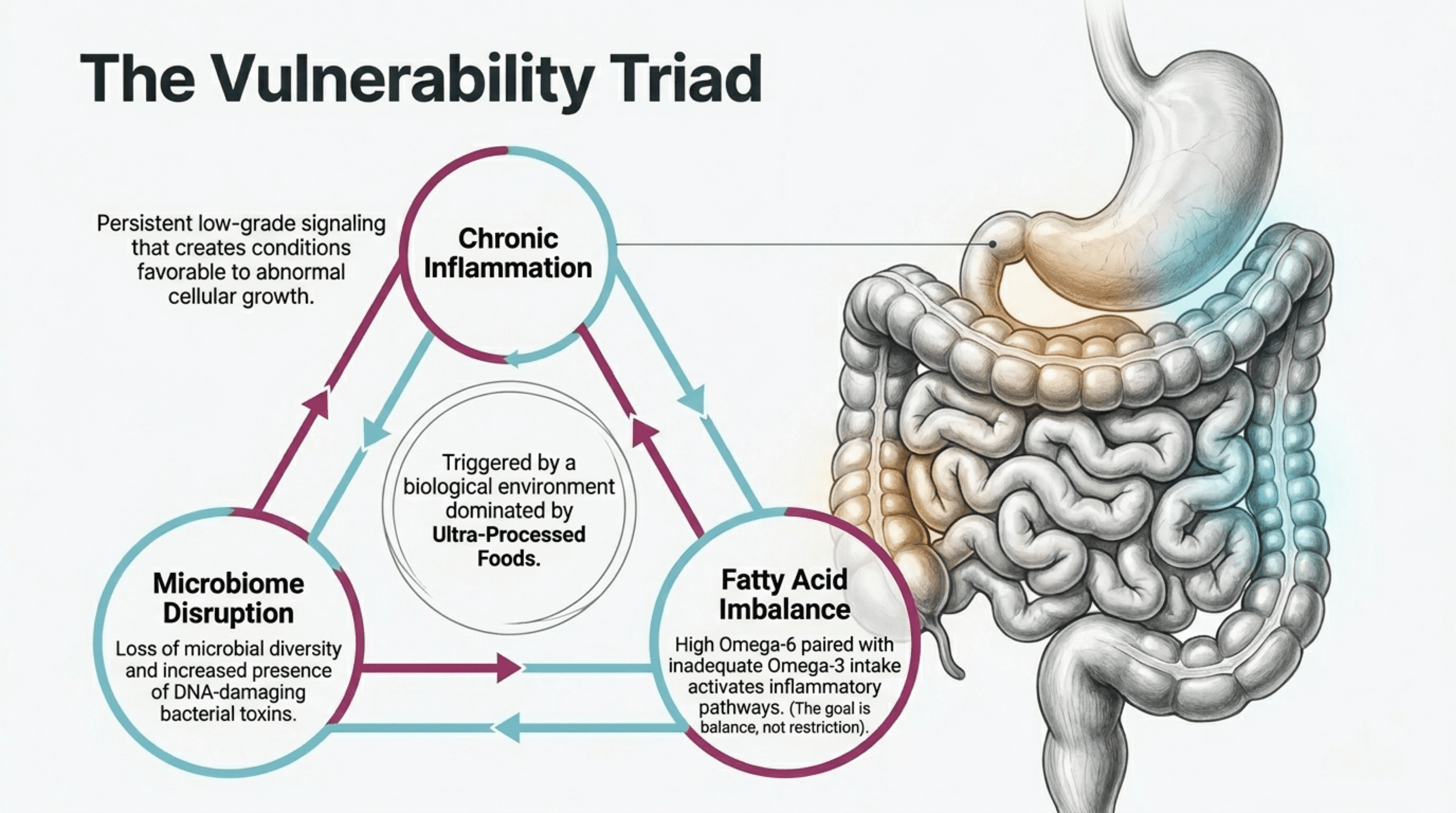
- Chronic Inflammation
Inflammation is a normal biological process.
Without it, injuries would never heal and infections could not be controlled.
The problem occurs when inflammation becomes chronic.
Researchers are investigating whether modern dietary patterns may contribute to persistent low-grade inflammatory signaling that influences cellular behavior over time.
This does not mean inflammation directly causes cancer.
It means inflammation may create conditions that make abnormal cellular growth more likely.
- Fatty Acid Imbalance
One of the most discussed findings involves the balance between omega-6 and omega-3 fatty acids.
Omega-6 fats are not inherently harmful.
In fact, they are essential to human health.
The challenge is that many modern diets contain substantially more omega-6 fats while simultaneously providing inadequate omega-3 intake.
Common omega-3 sources include:
- Salmon
- Sardines
- Mackerel
- Herring
- Chia seeds
- Flax seeds
- Walnuts
Omega-3 fatty acids help regulate inflammatory signaling throughout the body.
When omega-3 intake is low and ultra-processed food intake is high, inflammatory pathways may become more active.
Importantly, the current evidence does not support eliminating healthy fats or avoiding all omega-6-containing foods.
The goal is balance, not restriction.
- The Gut Microbiome
The human digestive tract contains trillions of microorganisms.
Collectively, these organisms help regulate:
- Immune function
- Nutrient absorption
- Metabolism
- Hormone signaling
- Inflammation
Researchers are increasingly finding that younger colorectal cancer patients may have distinct microbial patterns compared to older patients.
Some studies have identified higher prevalence of bacterial toxins capable of damaging DNA and altering normal cellular processes.
The precise relationship remains under investigation.
However, one consistent finding continues to emerge:
A more diverse microbiome appears to be associated with greater resilience
Why Fiber Matters More Than Most People Realize
When people think about fiber, they often think about digestion.
But fiber performs a much larger role.
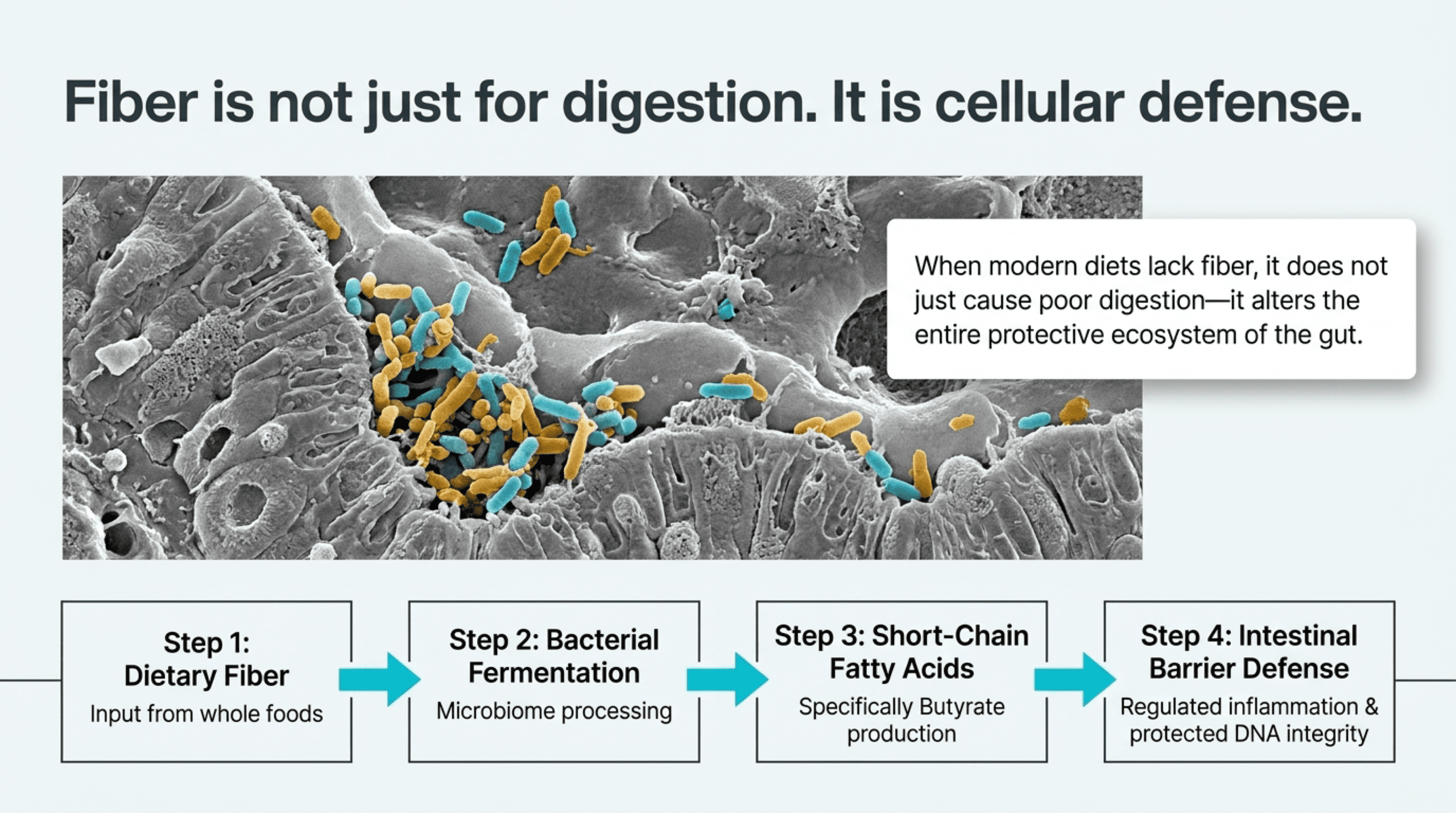
Fiber serves as fuel for beneficial gut bacteria.
When those bacteria ferment fiber, they produce compounds known as short-chain fatty acids, including butyrate.
These compounds help:
- Support intestinal barrier integrity
- Regulate inflammation
- Support immune function
- Improve metabolic health
Unfortunately, many modern diets contain far less fiber than recommended.
The result is not simply poor digestion.
It may influence the entire ecosystem of the gut.
What This Means For Everyday Health
At Fluid, we are careful not to reduce complex health problems to single causes.
The body is never that simple.
What the current research suggests is that long-term health is influenced by multiple interconnected systems:
- Nutrition
- Physical activity
- Sleep
- Stress management
- Breathing mechanics
- Metabolic health
- Gut health
- Movement quality
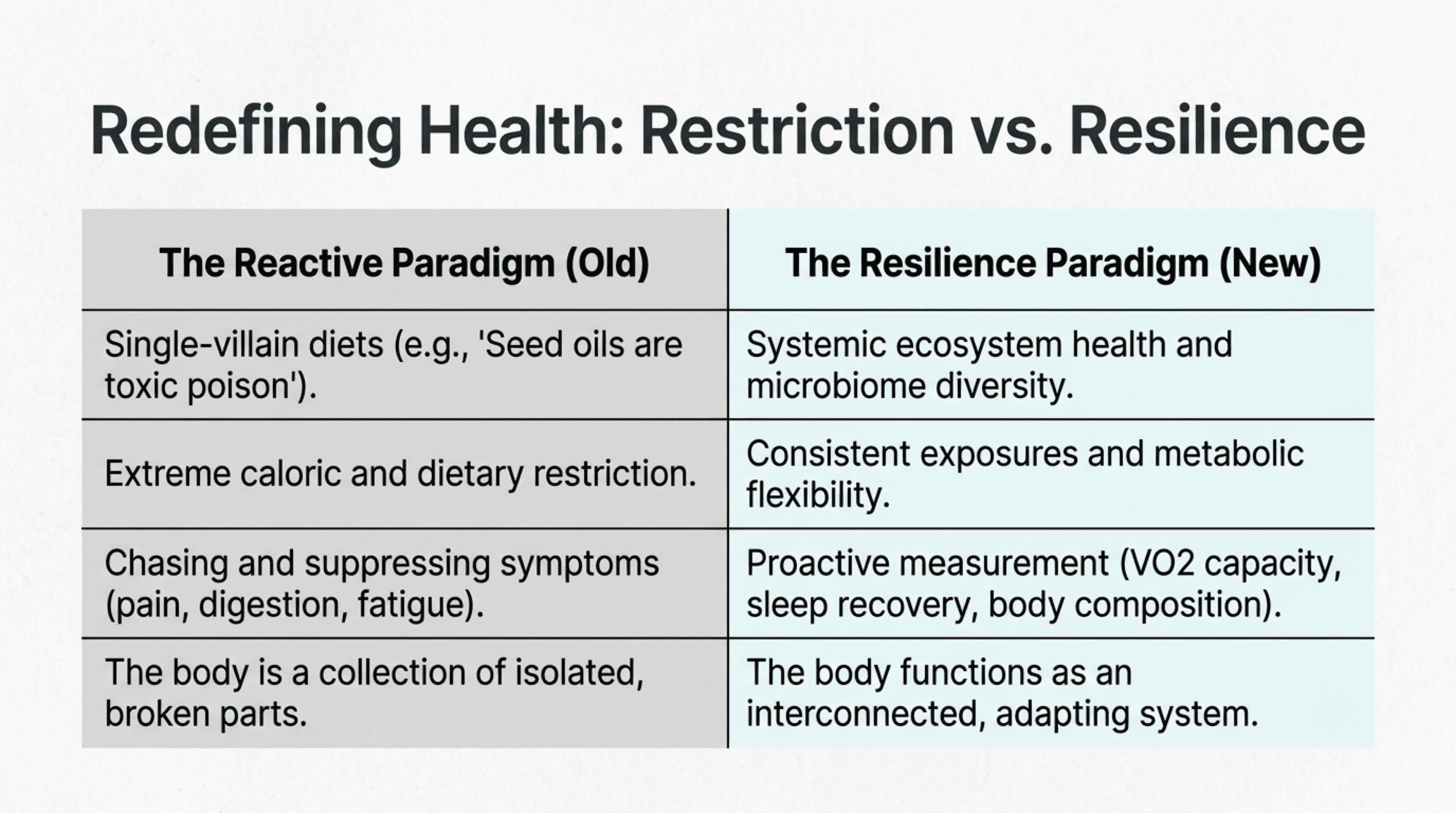
This is why our approach focuses on systems rather than symptoms.
Because the body functions as a system.
Not a collection of isolated parts.
How This Connects to the Fluid Method
Many of the same principles we apply to movement also apply to long-term disease prevention.
Pain Is a Signal, Not the Problem
Symptoms often reveal dysfunction.
They rarely explain it.
The same principle applies to digestive symptoms, inflammation, fatigue, and chronic disease risk.
Fitness Without Movement Intelligence Is Compensation
Nutrition works similarly.
Calories without quality can create adaptation that looks successful in the short term but becomes costly over time.
The Body Adapts Until It Breaks
Disease processes often represent the end result of years of accumulated adaptation.
Breathing Controls More Than Oxygen
Breathing influences:
- Stress regulation
- Nervous system function
- Recovery
- Exercise tolerance
- Metabolic efficiency
You Can't Fix What You Don't Measure
The future of healthcare is not reactive.
It is proactive.
Understanding:
- Movement patterns
- Body composition
- VO₂ capacity
- Recovery
- Nutrition habits
- Lifestyle factors
allows us to identify risks before they become problems.
Practical Takeaways
The current evidence supports several reasonable and defensible recommendations:
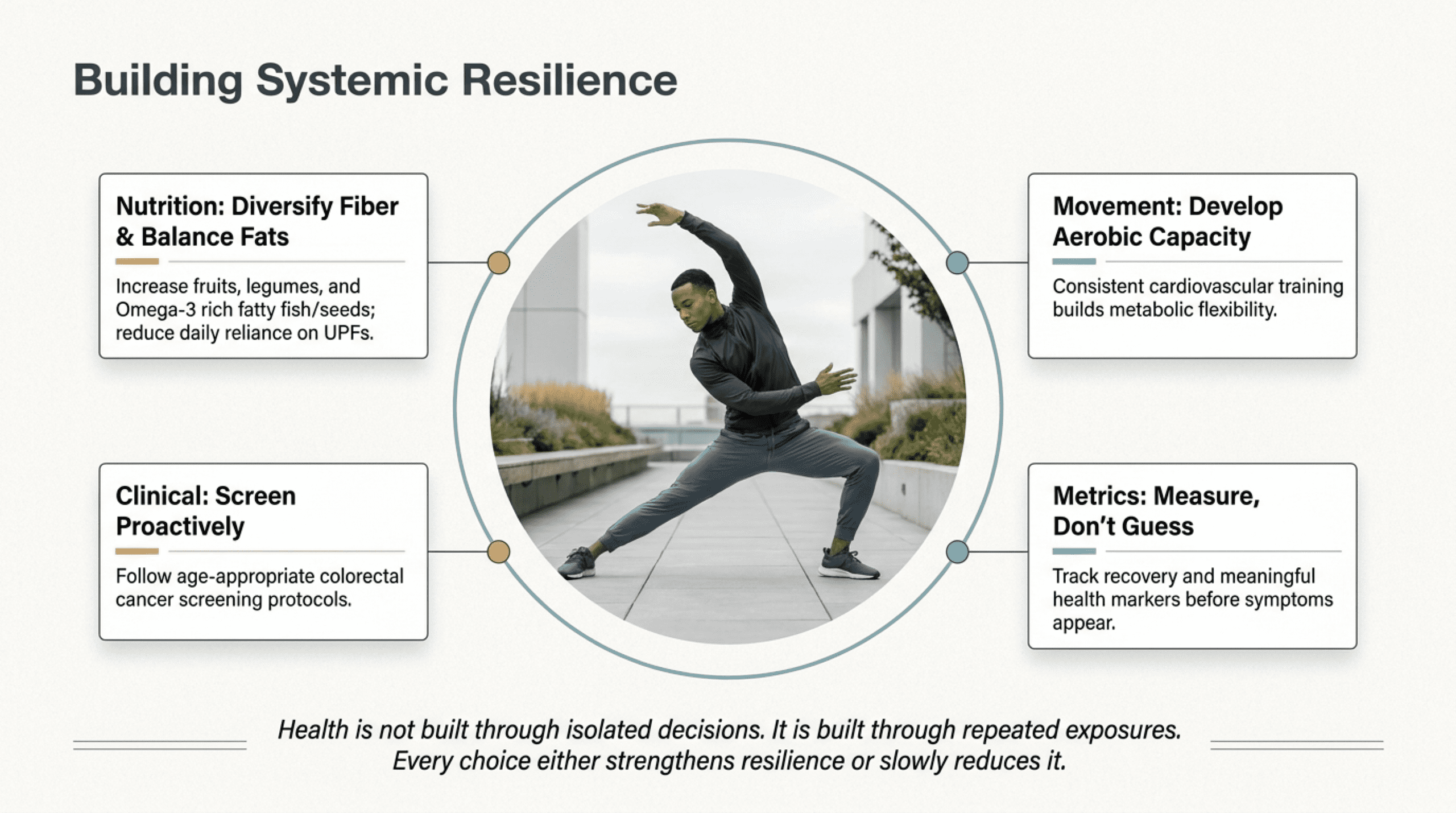
- Increase dietary fiber through fruits, vegetables, legumes, nuts, seeds, and whole grains.
- Reduce reliance on ultra-processed foods as daily staples.
- Increase omega-3-rich foods such as fatty fish and seeds.
- Avoid unnecessary antibiotic use when appropriate and directed by your healthcare provider.
- Maintain regular physical activity.
- Develop aerobic fitness through structured cardiovascular training.
- Prioritize sleep and recovery.
- Monitor meaningful health metrics instead of relying solely on symptoms.
- Follow appropriate colorectal cancer screening recommendations.
- Build health through consistent habits rather than extreme interventions.
The Bigger Picture
The rise in early-onset colorectal cancer may ultimately teach us something larger than cancer prevention.
It may remind us that health is not built through isolated decisions.
It is built through repeated exposures.
Every meal.
Every workout.
Every night of sleep.
Every recovery cycle.
Every movement pattern.
Every choice either strengthens resilience or slowly reduces it.
The goal is not perfection.
The goal is creating an environment where the body has more options, greater adaptability, and greater capacity to recover.
Because resilience—not restriction—is what long-term health is ultimately built upon.
---
Medical Disclaimer
This article is intended for educational and informational purposes only and should not be interpreted as medical advice, diagnosis, or treatment. The information presented reflects current scientific understanding at the time of publication but should not replace individualized recommendations from a qualified physician or healthcare provider.
Always consult your physician or other licensed healthcare professional regarding medical concerns, symptoms, screening recommendations, dietary changes, medications, supplements, or treatment decisions.
If you are experiencing rectal bleeding, unexplained weight loss, persistent abdominal pain, changes in bowel habits, anemia, or other concerning symptoms, seek medical evaluation promptly.
---
References
American Cancer Society. Colorectal Cancer Facts & Figures.
American Cancer Society. Colorectal Cancer Screening Guidelines.
JAMA Oncology (2025). Ultra-Processed Food Intake and Risk of Early-Onset Colorectal Adenomas.
American Society of Clinical Oncology (ASCO) Annual Meeting Abstracts, 2026.
Jin N., The Ohio State University Comprehensive Cancer Center. Early-Onset Colorectal Cancer Molecular Pathway Research.
Purcell R., University of Otago. Gut Microbiome and Bacterial Toxin Research in Early-Onset Colorectal Cancer.
World Cancer Research Fund International. Diet, Nutrition, Physical Activity and Colorectal Cancer.
National Cancer Institute. Colorectal Cancer Prevention and Risk Factors.
Cell Host & Microbe. Colibactin-Producing Bacteria and Colorectal Carcinogenesis.
Nature Reviews Gastroenterology & Hepatology. Gut Microbiome, Inflammation, and Colorectal Cancer Development.